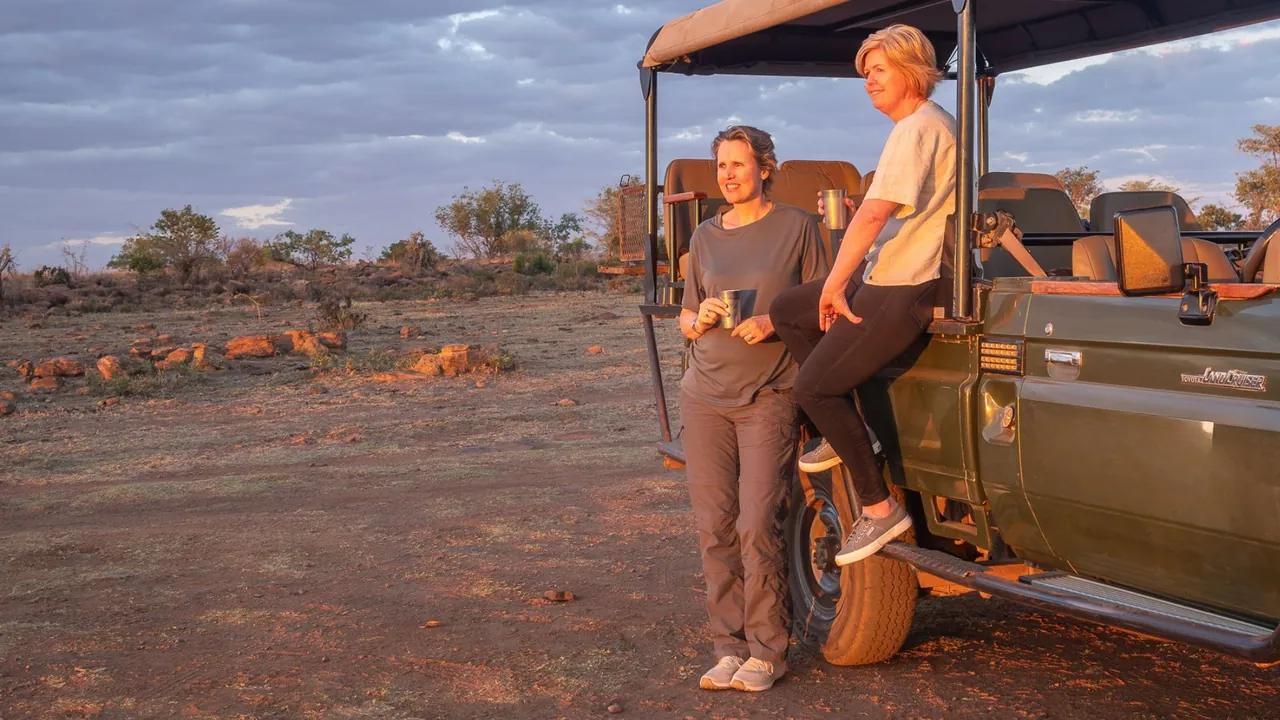
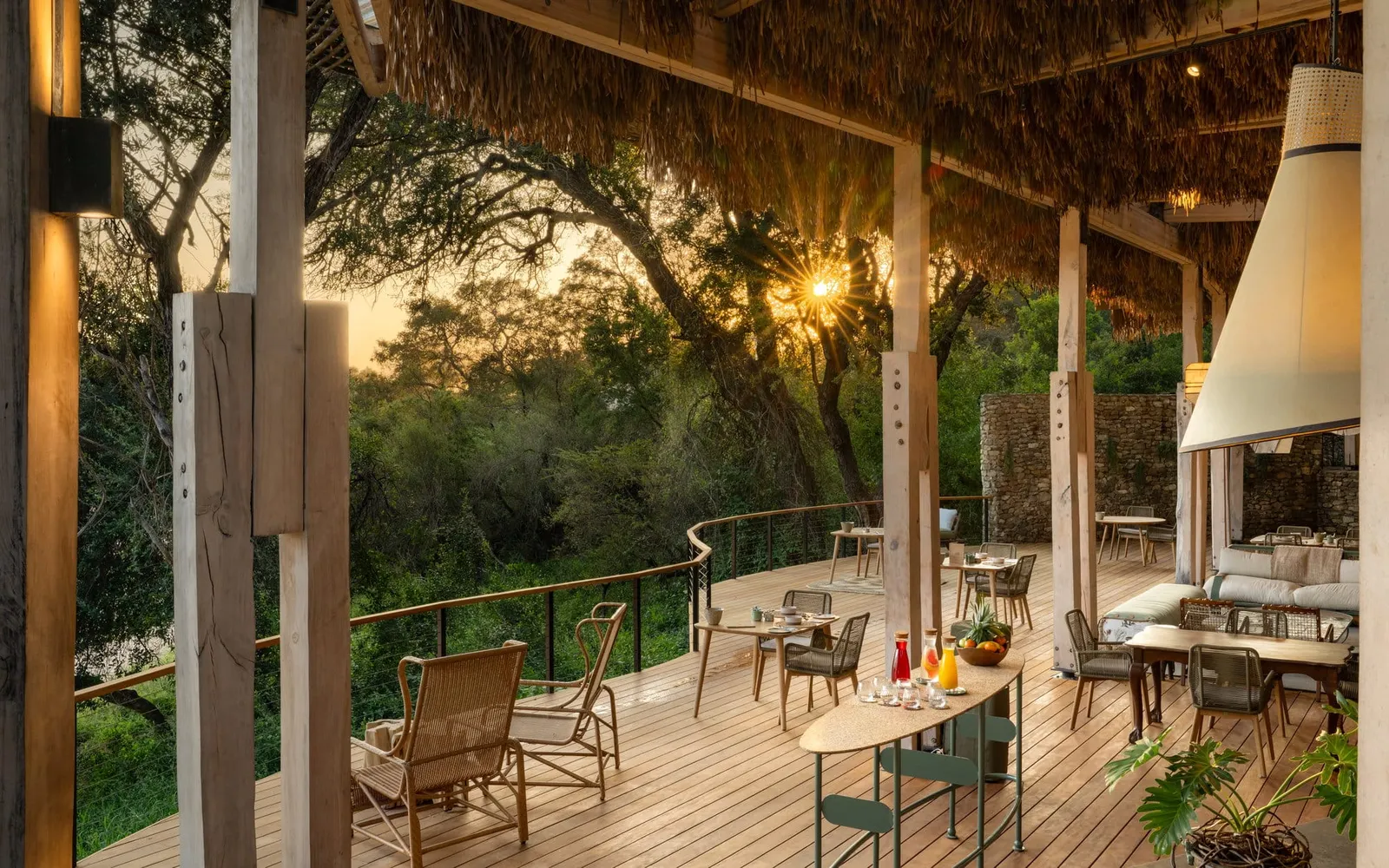
The short answer. Thornybush is the Big Five reserve for people who want a private reserve without a long transfer. It is close to Hoedspruit airport, its lodges are small, and it has private villas for families and friends travelling together. It is a malaria area.
What makes it different
Thornybush is a private reserve in the Greater Kruger, a short drive from Hoedspruit. Most of its lodges are small, some with just a handful of suites, so game drives are relaxed and you are rarely one of many vehicles at a sighting.
It has an unusually wide choice for its size: design-led tented suites at Saseka, classic family lodges, and whole villas such as Little Saseka and Kamara House, booked for your group alone with your own guide.
Who it suits
- Short breaks. Fly into Hoedspruit and be on an afternoon drive the same day.
- Couples. Saseka takes guests from 12.
- Families and friends. Private villas give you the whole place, with your own vehicle and guide.
Getting there
By road Thornybush is about 6 hours from Johannesburg, through Hoedspruit. Scheduled flights land at Hoedspruit, and the transfer to most lodges is short. We live in Hoedspruit, about 40 minutes from many lodges here, so we know the road well.
When to go
From May to September the bush is dry and open, and animals come to the waterholes. From November to March it is green and hot, with young animals, migrant birds and afternoon storms. The quieter months are usually when resident rates are strongest.
Good to know
- It is a malaria area. Speak to your doctor before you travel.
- Reserve levies are usually extra unless the special says otherwise.
- Villa rates on this page are for the whole villa per night, not per person.
Questions we are asked
How much does a Thornybush safari cost for South Africans?
South African resident rates in Thornybush start from R 6,800 per person per night sharing, with 10 specials live right now. Rates include meals, two game activities a day and selected local drinks; reserve levies are usually extra. The prices on this page update every day.
How many nights should I spend at Thornybush?
Two nights is the minimum on most resident specials. Three nights gives you six game drives and time to settle in, which is what we usually suggest for a first visit.
When is the best time to visit Thornybush?
May to September for classic game viewing, when the bush is dry and open and animals gather at the waterholes. November to March is green and hot, with young animals, migrant birds and afternoon storms. The quieter months often bring the strongest resident rates.
Is Thornybush open to the Kruger?
Yes. Thornybush is part of the open Greater Kruger, so animals move freely between the reserve and the Kruger National Park.
Is Thornybush a malaria area?
Yes. Thornybush is in a malaria area, so speak to your doctor before you travel. For a malaria-free Big Five safari, look at Madikwe, Welgevonden or Pilanesberg.
Can children stay at Thornybush?
Yes, depending on the lodge. Saseka Tented Camp takes children from 12. Thornybush Game Lodge welcomes younger children, and the private villas, Kamara House and Little Saseka, give families the whole place with their own guide and vehicle.
Thornybush or the Sabi Sand: which should I choose?
Choose Thornybush for a short, easy break close to Hoedspruit, small lodges and private villas. Choose the Sabi Sand if leopard is the priority or you want the widest choice of lodges. Both are Big Five reserves in the open Greater Kruger.
How do I get to Thornybush from Johannesburg?
It is about six hours by road through Hoedspruit, or a short flight to Hoedspruit airport followed by a quick transfer to most lodges.
How far is Thornybush from Hoedspruit airport?
It is a short transfer from Hoedspruit, which makes it one of the easiest private reserves to reach by air.
What is the difference between Saseka and Little Saseka?
Saseka is a small lodge with tented suites. Little Saseka is a private lodge within it, with up to 3 tented suites booked for your group alone.
Is Thornybush a Big Five reserve?
Yes. Lion, leopard, elephant, buffalo and rhino all live here.